Coatings
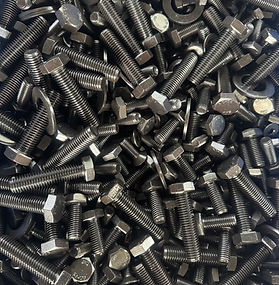
Blackening of stainless steel
Blackening of Stainless Steel
Stainless steel blackening is a chemical conversion coating process used to produce a uniform, non-reflective black finish on stainless steel components. The process chemically modifies the surface of the stainless steel to form a thin, adherent black oxide/conversion layer rather than depositing a conventional plated coating.
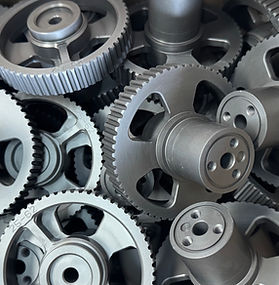
Hard anodizing
Hard anodizing (also known as hard coat anodizing or mil spec 8652 Type III hard anodizing) is an advanced electrochemical process that converts the surface of aluminum (and certain other non-ferrous metals) into a thick, dense layer of aluminum oxide. Hard anodizing is a much thicker and harder oxide layer (typically 25–100+ microns) compared to standard (Type II) anodizing.
The resulting coating is ceramic-like, extremely well-integrated with the base material.

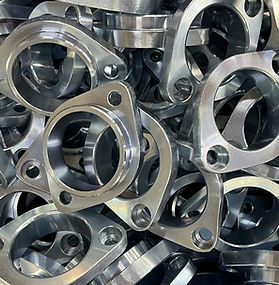
Zinc plating
Zinc plating (also known as electro-galvanizing) is an electrochemical process that deposits a thin layer of zinc onto metal surfaces—typically steel or iron—to provide excellent corrosion protection.
The zinc acts as a sacrificial coating: it corrodes preferentially (sacrificing itself) before the underlying metal, offering both a physical barrier against moisture and oxygen and cathodic (galvanic) protection even if it gets scratched.

Black Oxide
Black oxide coating (also called blackening or gun bluing) is a chemical conversion process that turns the surface of ferrous metals (mainly steel and iron) into a thin layer of black iron oxide (magnetite, Fe₃O₄). The part is immersed in a hot solution , creating a uniform black finish that bonds directly to the metal—no added thickness like paint or plating. Parts are oiled on compeletion

Industrial and bakeware Non-stick coatings
Industrial nonstick recoating is a specialized refurbishment service that restores or reapplies fluoropolymer-based nonstick coatings (primarily PTFE, FEP, or similar) to industrial components, machinery parts, molds, hoppers, rollers, bakeware trays, processing equipment, and tools. This extends equipment life, reduces material adhesion, minimizes downtime, and improves release properties in demanding manufacturing environments like food processing, plastics molding, packaging, rubber production, and chemical handling.

Anodizing
Anodizing is an electrochemical process that creates a tough, protective oxide layer on aluminum (and some other metals). The metal is placed in an acid bath and electricity builds a hard, porous coating that can be died into a variety of colours.This coating bonds perfectly to the surface.

High performance paints
High-performance paints are specialized formulations designed to outperform standard paints in demanding conditions. They typically offer superior properties such as:
• Exceptional durability and abrasion resistance
• High corrosion protection (e.g., extended salt spray resistance)
• Extreme temperature tolerance (high-heat or cryogenic resistance)
• Chemical/solvent resistance
• Low friction or dry lubrication (in some cases)
• Thin-film application for precision use